



You’re in your 20s. Life is busy and exciting, and you’re finally enjoying that glow you earned after surviving teenage acne.
You’re climbing the corporate ladder (for some), falling in love with your happily ever after, and then one day, a dark spot shows up on your cheek and just won’t go.
That’s pigmentation. And no, there’s really no upside to it.
But before you spiral or stock up on every brightening product available online, here’s what’s actually happening and how to manage it without overcomplicating things.
What Pigmentation Really Is (And What It Isn’t)
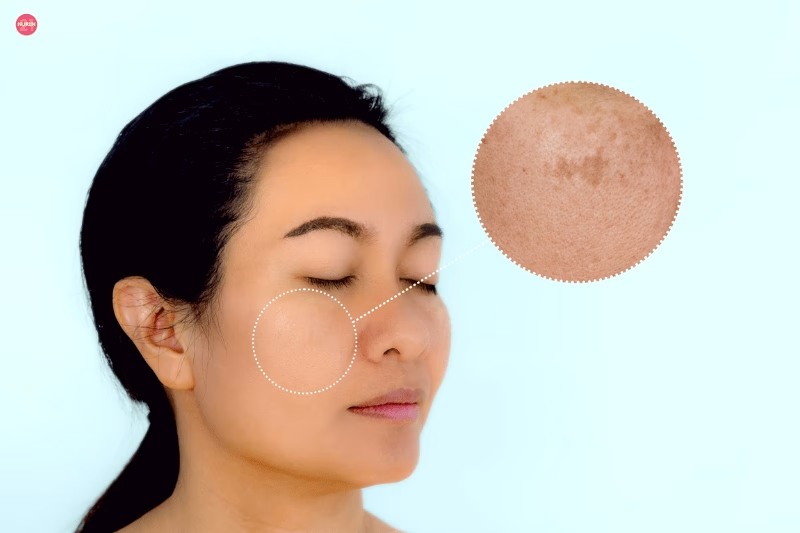
Pigmentation happens when your skin produces excess melanin in certain areas, showing up as dark spots, patches, or lingering marks that feel far more noticeable than they should.
But before you wave the white flag and commit to recurring facial packages, know this: your skin isn’t giving up on you.
Pigmentation is usually just your skin responding to real life, sun exposure that quietly adds up during short walks and café hops, acne that leaves behind a paper trail long after the pimple is gone, hormonal shifts, stress, irregular sleep, and routines that become inconsistent without you even realising it.
That’s why many people start noticing pigmentation in their 20s.
It’s less about age and more about accumulation, with pigment slowly settling in rather than arriving all at once.
The Skincare Trap
We get it. You want fast results. You want your glow back.
And with online shopping and social media at your fingertips (I mean, browse TikTok and shop at the same time???!!), it’s incredibly easy to convince yourself that the next serum, toner, or celebrity-approved cream is the answer.
One sleepy scroll later, your cart is full and your bank account is dry.
Before you do that, wait. Pigmentation doesn’t respond well to chaos.
Layering everything at once, switching products every week, or throwing actives together without a plan usually does more harm than good. Take it one step at a time and resist the urge to fix everything overnight.
If you’re going to buy something, read the ingredient list. not the celebrity reviews. What works for them may not work for you. And… what makes you think it even worked for them?
Something to keep in mind when managing pigmentation is that sunscreen is non-negotiable.
If you do nothing else, wear it daily; it stops existing spots from getting darker and helps prevent new ones from forming. Without sun protection, even the best brightening products won’t get very far.
When it comes to treatment, gentler is better. Ingredients like vitamin C and niacinamide help even out skin tone over time, but they only work when your skin barrier is healthy. Give them time – a good amount of it.

Trusty retinol can also help by speeding up skin renewal, encouraging pigmented cells to fade gradually. Start slowly, make sure your skin can tolerate it, and always protect your skin during the day.
And sometimes, despite your best efforts, certain spots just refuse to budge.
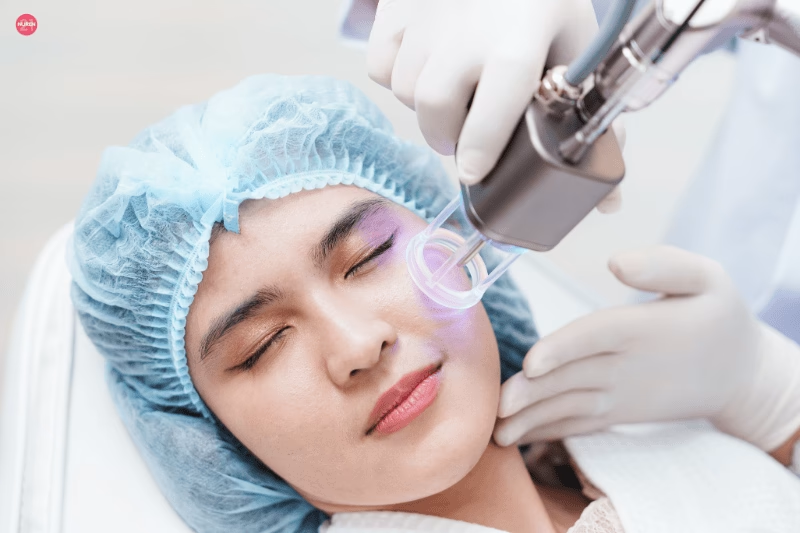
When that happens, it’s okay to call in the professionals. Chemical peels, lasers, and light treatments can help fade stubborn pigmentation. If you do explore them, make sure you’re seeing a qualified professional who understands your skin type, lifestyle, and expectations.
Living with Pigmentation (For Now)

As someone currently dealing with chin pigmentation, it is incredibly annoying.
And yes, on some days, it does cancel out a bit of that glow you thought you finally earned. But this is also the point where there’s not much you can do but improve.
So while pigmentation might change how your skin looks for now, it also teaches you where it needs a little more patience and the importance of quality protection.
At the very least, now you know what it needs, and that already puts you (and me) one step ahead.