


Smart casual is one of those things that everyone else had a meeting about, came to a mutual agreement, and didn’t invite you. It’s vague enough to be confusing, yet specific enough that you know showing up in your favorite jeans or your fancy cocktail dress will be wrong.
Ladies have a million variables to consider in terms of dress code. Do you look too formal? Too casual? Too boring? Will people judge you? Unlike men’s smart casual, which basically consists of “nice pants and a button-up,” women’s smart casual opens up a whole universe of possibilities and missteps.
Let’s break this down a bit so you actually know what you’re doing when you open your closet.
The Basics

Smart casual became the default dress code for a lot of situations – casual dates that might get slightly fancier, dinner with friends’ parents, company happy hours, first days at new jobs, or meeting clients who aren’t expecting you in a full suit. It’s the “I respect this occasion but I’m also going to be comfortable” dress code.
Smart casual sits right in the middle between full business formal and completely relaxed. It’s the “I made an effort but I’m not trying too hard” outfit. You’ve heard the rule of thumb: business casual is 70% formal and 30% casual, while smart casual flips a little to 60% casual and 40% formal. Close enough.
In practical terms, this means you’re combining pieces that feel polished with pieces that feel more relaxed. Think tailored blazer with casual jeans. Dressy blouse with comfortable sneakers. Structured trousers with a laid-back sweater.
The unspoken rules of smart casual are: everything should be clean and fit well, nothing should have stains or wrinkles, your outfit should look intentional (not like you just grabbed the first thing in your closet), and you should look like you showered and took at least five minutes to put together an outfit.
Too Smart or Too Casual?

The biggest mistake people make is overthinking smart casual. Let’s clarify what crosses the line in each direction.
Too Smart (Crossed into Business Formal):
- Full blazer and dress pants suits
- Pencil skirts that go to the knee with button-up blouses
- Anything you’d wear to a job interview at a law firm
- Overly formal shoes like kitten heels or professional pumps
- Multiple layers of formal pieces
- Anything that looks rehearsed or stiff
Too Casual (This is Just Plain Casual):
- Jeans (unless specifically stated as allowed cause again, everyone has different definitions)
- Shorts of any length
- Ripped or distressed clothing
- Graphics tees or band shirts
- Athletic wear or workout clothes
- Flip-flops or athletic sneakers
Apparel To Have on Hand
Okay we’ve covered the don’ts, so here are the dos.
Bottoms:

- Dark or black jeans that fit well (they should look intentional, not slouchy
- Neutral trousers in black, gray, navy, or beige, chinos in neutral colors,
- Knee-length skirt in a solid color or subtle pattern.
- Maxi skirt (not full skirt cause may be too formal, also don’t want to end up tripping)
Tops:

- Crisp button-up shirts
- Simple sweaters or cardigans in solid colors
- Structured t-shirts that aren’t baggy (fitted casual is the goal)
- Blouses that look put-together without being formal.
- Neutral toned blazer (this one is a lifesaver)
Dresses

- Sheath dresses
- Wrap dresses
- Shirt dresses with a belt
Shoes:

- Leather flats or loafers
- Ankle boots
- Pumps with a modest heel
- Professional-looking sandals with a strap or Mary Janes
Accessories:

- A simple watch
- Sunglasses
- Delicate jewelry (not those loud, chunky pieces but maybe a statement necklace can work depending on how you style it. Check this out for costume jewellery tips!)
- Structured handbag or work-appropriate tote

Suited for Success

If you’re still confused, here’s a foolproof formula: One polished piece + one casual piece + one neutral accessory.
1: Structured blazer (polished) + dark jeans (casual) + simple watch (accessory)
2: Trousers (polished) + casual sweater (casual) + leather flats (accessory)
3: Knee-length skirt (polished) + fitted tee (casual) + ankle boots (accessory)
The point is that you’re mixing effort levels so nothing looks too fancy but everything looks intentional.
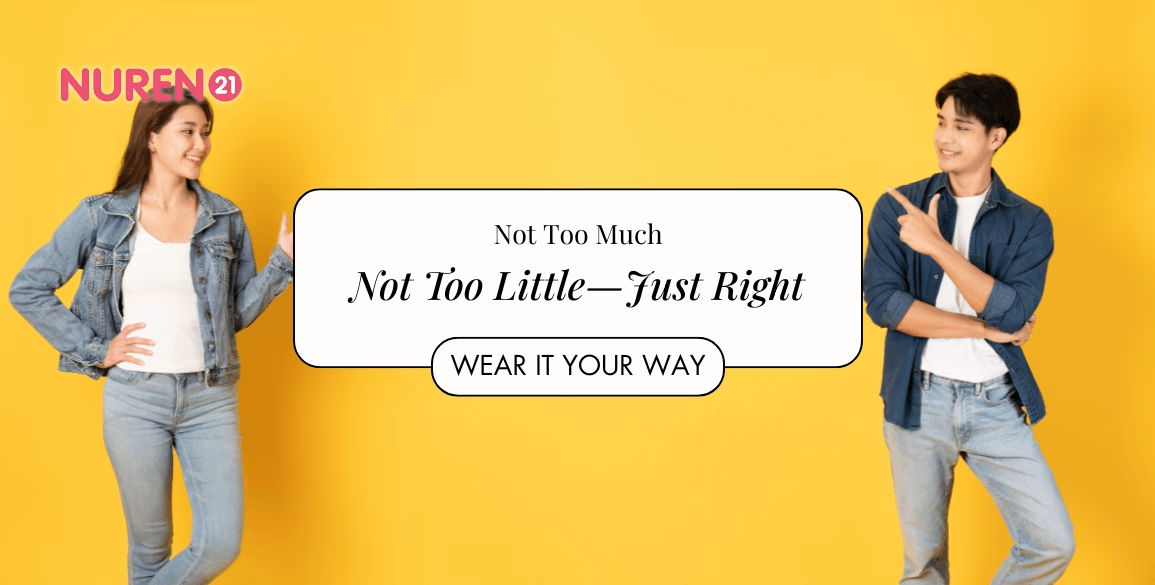
You’re not trying to impress anyone with your wardrobe, but you’re also not showing up in what you slept in. It’s the dress code Goldilocks zone, not too much, not too little, just right. Once you get a few key pieces, you’ll realize that smart casual is actually one of the easiest dress codes to work with. It gives you plenty of room to express yourself while keeping things professional enough for most situations.
Now go forth and own that smart casual dress code like you actually got the memo. Just make sure you actually remember to come to the dress code meeting next time.