


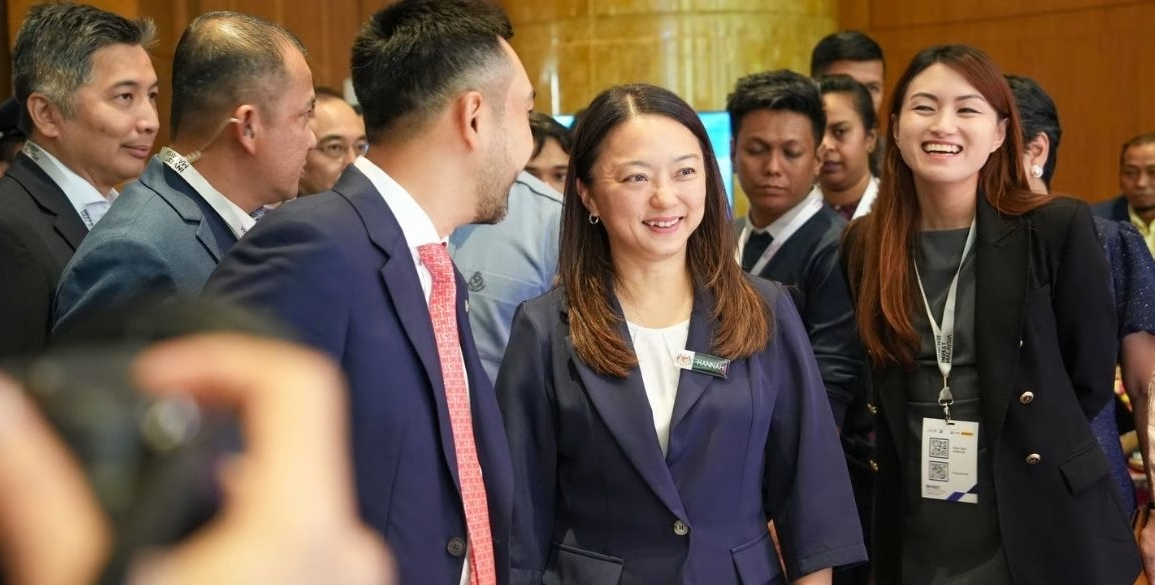

She almost didn’t come back.
After completing her law degree at the University of Tasmania and being admitted to the Supreme Court of Tasmania, Hannah Yeoh had every intention of building a life in Australia.
When her permanent residency application was rejected, she returned to Malaysia, and that twist of fate would eventually take her from a legal firm in Petaling Jaya to the floor of Parliament.
Today, Hannah Yeoh is one of the most recognisable women in Malaysian public life, having held roles that span state politics, federal Parliament, social policy, sports governance, and now urban administration. Each chapter has been distinct. Together, they form a career that is anything but linear.
Subang Jaya: Where It All Began
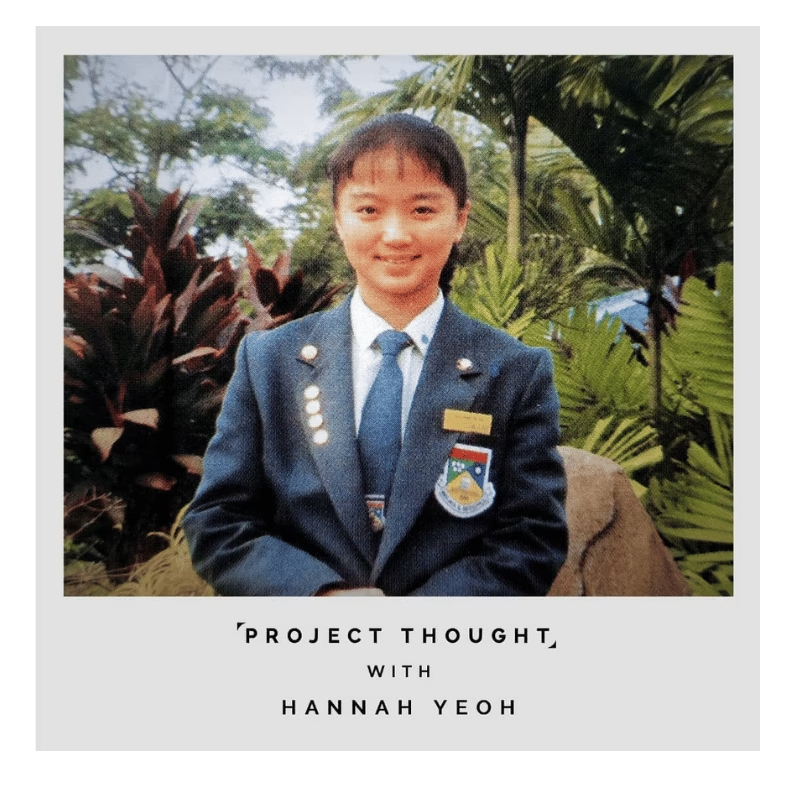
In 2008, Hannah Yeoh did something that many seasoned politicians couldn’t manage: she won on her first attempt, and she did it with 71% of the vote.
Her opponent was an experienced female politician with a lengthy campaign booklet. Yeoh had a leaflet with her passport photo and a tagline that turned her inexperience into a weapon:
“Yes, I have no experience, I have no experience in corruption!”
Young Malaysians showed up. Friends and allies raised over RM100,000 to fund her campaign. She won the Subang Jaya state seat with a majority of 13,851 votes.
She would go on to serve the constituency for two full terms, from 2008 to 2018, building her political foundations through constituency work, community engagement, and the slow, unglamorous work of local governance.
It was here that she learned what politics actually felt like from the ground up, before any title or office came with it.
Breaking a Ceiling in Selangor
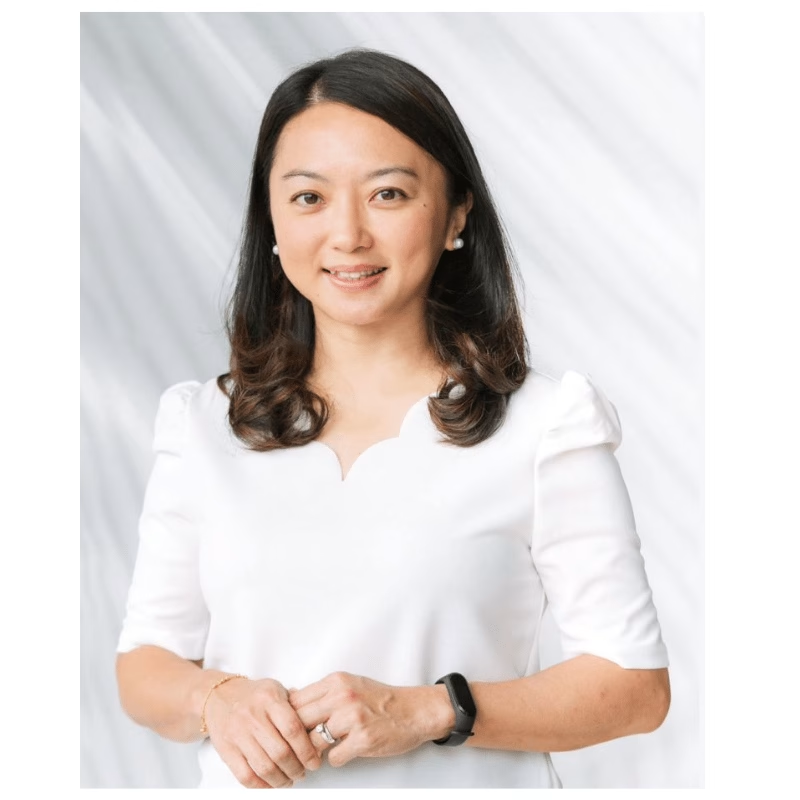
In June 2013, Hannah Yeoh was sworn in as Speaker of the Selangor State Legislative Assembly.
She was 34 years old. She was elected unopposed. And she became the first woman + the youngest person, to hold the position in any legislative body in Malaysia.
The role placed her at the centre of the assembly’s proceedings: overseeing debates, maintaining order, and ensuring the integrity of the legislative process.
But she wasn’t content to simply hold the chair because in November 2013, she tabled a motion to mandate live broadcasts of assembly sittings, making proceedings publicly viewable online and on television.
She held the Speakership until 2018, five years in which she redefined what the role could look like.
Into Parliament: The Segambut Years
The 2018 general election was historic for Malaysia.
Pakatan Harapan ended Barisan Nasional’s 61-year grip on federal power, and Hannah Yeoh was part of that wave, but she made a deliberate move. Rather than defending her Subang Jaya state seat, she contested the Segambut parliamentary constituency in Kuala Lumpur, stepping from state into federal politics.
She won…and in 2022, she won again but this time with a majority of 56,980 votes, taking over 80% of the vote in a three-cornered contest.
Deputy Minister: A Voice for the Vulnerable
From 2018 to 2020, Hannah Yeoh served as Deputy Women, Family and Community Development Minister.
She became one of the most vocal federal voices on child marriages, pushing for stronger legal protections. She championed the Sexual Harassment Bill, navigating its complexity through government review and parliamentary debate.
She advocated for stateless children, and repeatedly called for a dedicated children’s ministry to be established. “It takes so much effort to convince people,” she said in one interview. “To encourage someone in a position of power to believe that we need such an agency to protect children is an uphill climb.”
As a mother of two, she brought personal conviction to a portfolio that dealt with the lives of families who rarely made headlines.
The Youth and Sports Ministry: High Stakes and Hard Choices
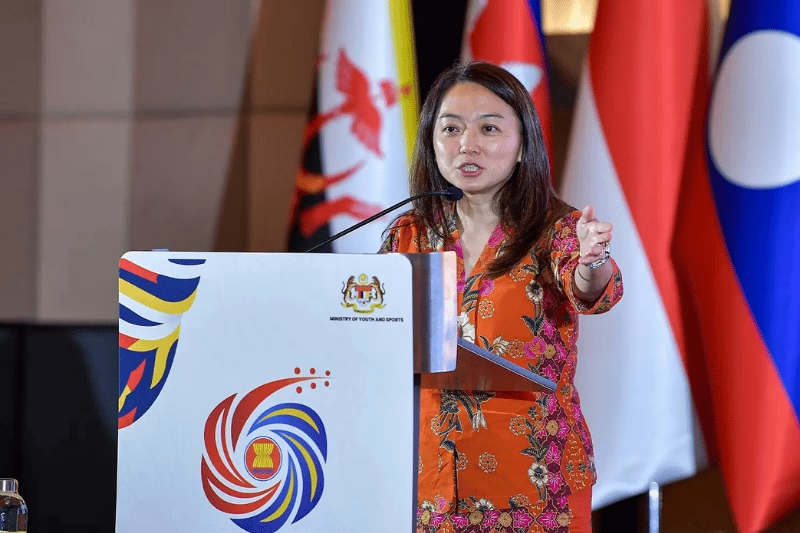
In December 2022, Hannah Yeoh was appointed Minister of Youth and Sports in Prime Minister Anwar Ibrahim’s unity government cabinet.
It was a high-visibility role, one that came with national expectations and public scrutiny in equal measure. Her time in the ministry was defined by several significant initiatives and difficult decisions.
The Safe Sport Code: In 2023, she introduced the Safe Sport Code, a framework designed to address harassment, abuse, and misconduct within Malaysian sports. The code established clearer standards of conduct and was implemented with the involvement of national sports associations, the Olympic Council of Malaysia, and the Paralympic Council of Malaysia – an attempt to institutionalise safety in a sector that had long operated without formal safeguards.
Road to Gold: Malaysia has been chasing its first Olympic gold medal for decades. The Road to Gold programme was designed to give that pursuit more structure, providing selected national athletes with targeted support ahead of the Olympics, including preparation, performance planning, and direct funding. In 2023, Yeoh announced the programme had received an allocation of RM6.9 million and committed to fair treatment for all athletes under it.
The 2026 Commonwealth Games Decision: When Victoria withdrew from hosting the 2026 Commonwealth Games, Malaysia was approached to step in. Yeoh was candid in Parliament: it may be best not to host, she said, if the cost would fall on taxpayers. The government ultimately rejected the offer, citing financial uncertainty and insufficient preparation time. It was an unpopular position in some quarters, but a defensible one.
Football and the Limits of Ministerial Power: In 2025, the Football Association of Malaysia became embroiled in controversy over player documentation issues. Yeoh told Parliament plainly that the ministry could not sack FAM officials; government interference in football bodies risked FIFA sanctions. What she could do was propose withholding additional funding to FAM pending an independent investigation led by a former senior judge. The episode illustrated a tension that any sports minister faces: the desire to act and the institutional limits on how.
A New Chapter: Federal Territories
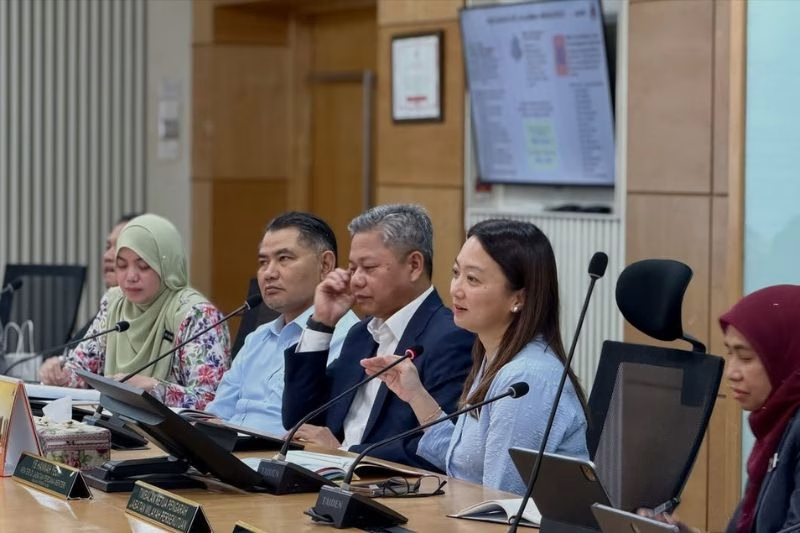
In December 2025, a Cabinet reshuffle brought Hannah Yeoh to her current role: Minister in the Prime Minister’s Department in charge of Federal Territories.
The appointment carried quiet historical weight. She became the first non-Malay person to hold the Federal Territories portfolio in Malaysia, covering the administration of Kuala Lumpur, Putrajaya, and Labuan. The role encompasses public services, urban planning, flood mitigation, development, and the daily governance of Malaysia’s most densely populated and politically significant territories.
She entered the role with stated priorities: transparent administration, improved public services, sustainable development, protecting recreational spaces, and reducing the frequency and severity of flooding. The challenges are immediate, the expectations high, and the scrutiny in a capital city… relentless, to say the least.
What the Career Adds Up To
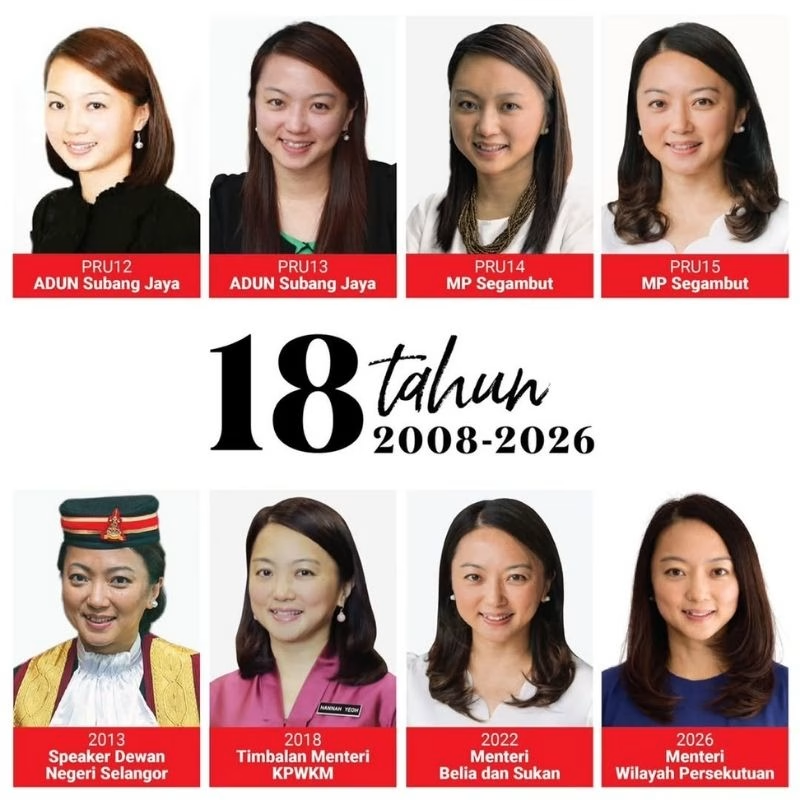
Hannah Yeoh’s political journey has crossed more terrain than most. She began as a first-time candidate with a leaflet and a borrowed campaign fund. She became a historic Speaker. She entered federal Parliament, fought for children and families from within the government, managed one of Malaysia’s most visible ministries, and now steers the administration of the nation’s capital.
What links all of it isn’t a single cause or portfolio; it’s a consistent willingness to take on what’s in front of her and to be accountable for it. In a political culture often defined by who you know and which coalition you belong to, that is its own kind of statement.
For young Malaysian women watching from the outside, her career offers a different kind of blueprint: not a straight line to power but a long road through different rooms, with each one harder and each one larger than the last.
Disclaimer: Information in this article was sourced through various platforms. In the event of any inaccuracies, please reach out for amendments.
Note: Unless stated otherwise, all images used in this article are credited to @hannahyeoh on Instagram.