



For many women, PMOS is something they only start hearing about after months, or even years, of confusing symptoms.
Maybe your period has become unpredictable. Maybe your acne feels harder to manage than before. Maybe your weight feels different, or you notice more hair growing on your face, chin, chest or body.
At first, these changes may seem unrelated. You may think it is stress, ageing, hormones, skincare, diet, or simply “one of those things”.
For some women, however, these symptoms may be connected to PMOS.
PMOS stands for Polyendocrine Metabolic Ovarian Syndrome.
It was previously known as PCOS, or Polycystic Ovary Syndrome.
The name has changed because this condition is not only about the ovaries. It can affect the menstrual cycle, skin, hair growth, fertility, metabolism, weight, blood sugar and overall hormonal health.
This is also why PMOS can look very different from woman to woman. One woman may struggle with irregular periods. Another may have acne and facial hair. Someone else may only find out when she is trying to get pregnant.
What Does PMOS Mean?
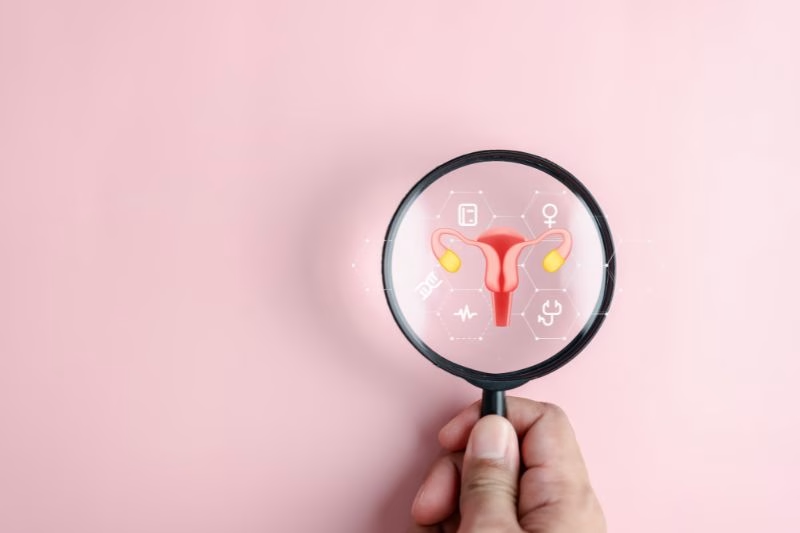
PMOS is a hormonal and metabolic condition.
Many women with PMOS have higher levels of androgens, which are sometimes called “male-type” hormones. Women naturally have androgens too, but higher levels may lead to symptoms such as acne, excess facial or body hair, hair thinning and irregular ovulation.
Ovulation is when the ovary releases an egg. When ovulation does not happen regularly, periods may become irregular, very far apart, very light, very heavy, or absent.
Some women with PMOS may also have small fluid-filled follicles in the ovaries. However, not everyone with PMOS has visible cysts. Having ovarian cysts alone also does not always mean a woman has PMOS.
This is one reason the updated name matters. PMOS is not just a “cyst problem”. It is a wider hormonal and metabolic condition.
Why PMOS Is More Than A Period Problem
For many women, irregular periods are one of the first signs that something may be different.
However, PMOS can affect more than the menstrual cycle.
It is often linked to insulin resistance. This means the body has difficulty using insulin properly. Insulin helps control blood sugar, so when the body becomes less responsive to it, this may affect blood sugar levels, weight management and long-term metabolic health.
This is why PMOS should not be brushed off as “just hormones”.
It can affect how a woman feels in her body, how confident she feels in her skin, how regular her periods are, how easy or difficult it is to conceive, and how her health may need to be monitored over time.
For younger women, it may show up as acne, irregular periods or body hair changes. For women in their 20s and 30s, it may become more obvious when planning pregnancy. For older women, the focus may shift towards blood sugar, weight, heart health and long-term wellbeing.
Common Signs Of PMOS
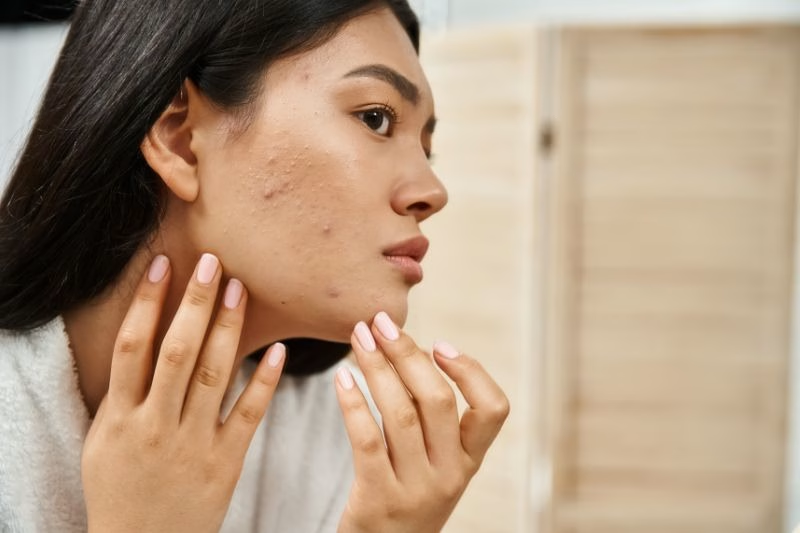
PMOS does not look the same for everyone.
Some women may have obvious symptoms. Others may only notice small changes. Some may go years without realising that their symptoms are connected.
Common signs of PMOS may include:
Irregular periods, missed periods, very far-apart periods, acne, oily skin, excess facial or body hair, thinning hair on the scalp, weight changes, difficulty losing weight, difficulty getting pregnant, darkened skin patches around the neck or underarms, and changes in mood or energy.
Not every woman will have all these symptoms.
Some may only have one or two. Others may only discover they have PMOS after seeing a doctor for fertility concerns, skin issues or irregular cycles.
How Is PMOS Diagnosed?

PMOS should be diagnosed by a healthcare professional.
A doctor may ask about your period cycle, skin changes, hair growth, weight changes, family history and any fertility concerns.
They may also recommend blood tests to check hormone levels and rule out other possible conditions. In some cases, an ultrasound may be done to look at the ovaries.
Because PMOS can look different from person to person, it is important not to self-diagnose based on social media posts, online checklists or one symptom alone.
If your body feels different from what is normal for you, it is worth getting checked.
Can PMOS Be Managed?
Yes, PMOS can be managed.
There is no single treatment that works for everyone because each woman may have different symptoms and different goals.
For one woman, the priority may be regulating periods. For another, it may be managing acne, facial hair, weight, fertility, blood sugar or long-term health risks.
A doctor may recommend lifestyle changes, medication, hormonal treatment, fertility support or regular health monitoring, depending on the person’s needs.
Small lifestyle changes may also help support overall health. This can include balanced meals, regular movement, enough sleep, stress management and maintaining regular medical check-ups.
The goal is not to “fix everything overnight”. The goal is to understand what is happening in your body and get the right support.
FAQ: Common Questions About PMOS
Is PMOS the same as PCOS?
PMOS is the updated name for the condition previously known as PCOS. The new name better reflects that the condition affects hormones, metabolism and different parts of the body, not only the ovaries.
Is PMOS serious?
PMOS is common, but it should still be taken seriously. It can affect periods, skin, hair growth, fertility, blood sugar and long-term metabolic health.
Can PMOS go away?
PMOS is usually a long-term condition. However, symptoms can often be managed with the right treatment, lifestyle support and regular medical care.
Can I get pregnant if I have PMOS?
Yes, many women with PMOS can get pregnant. However, some may need medical support if irregular ovulation makes it harder to conceive.
Does everyone with PMOS have cysts?
No. Despite the old name PCOS, not every woman with the condition has visible ovarian cysts.
Should I see a doctor for irregular periods?
Yes, especially if your periods are often missed, very far apart, suddenly different from your usual cycle, or affecting your daily life.
Disclaimer: The information in this article is intended for general reading and awareness only. It does not replace advice from qualified medical, legal, financial, religious or other relevant professionals. If you are facing a specific concern, please speak to the appropriate expert or authority for guidance.