


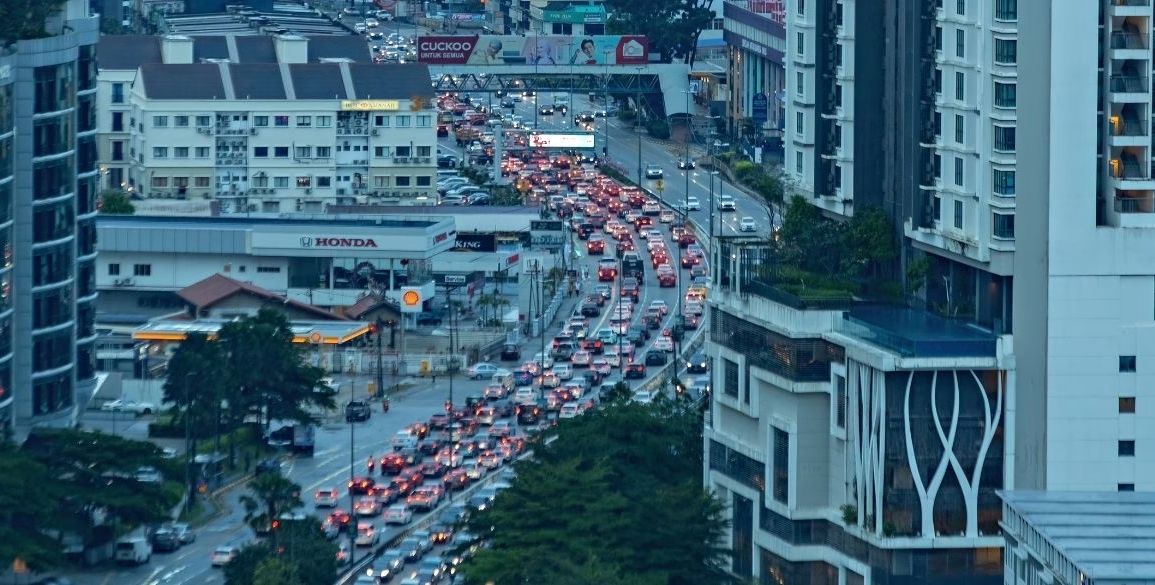

There is a certain kind of tiredness that comes with Malaysian traffic.
You wake up early, but somehow it is still not early enough. You leave the house before the sun fully settles into the day, only to end up bumper to bumper with everyone else who had the same idea.
By the time you reach the office, you have already spent an hour or two on the road. You have checked Waze three times. You have answered one message at a traffic light. Maybe you have skipped breakfast. Maybe you have already called the school, the babysitter, your mother, your husband, your team.
And then, only then, your workday officially begins.
For many Malaysians, especially those living and working around the Klang Valley, traffic has become part of the job even though it is not in the job description.
Reports have estimated that some Klang Valley commuters lose more than 500 hours a year to traffic congestion. Whether the exact number is higher or lower depending on where you live and how you travel, one thing is clear: too much of our lives is being spent just trying to get to work.
At some point, we need to ask the obvious question.
If the work can be done from home, why are we still forcing people to sit in traffic just to prove they are working?
Traffic Is Not Just A Road Problem
Whenever we talk about traffic, the conversation usually goes straight to highways, tolls, public transport, parking, roadworks and peak-hour jams.
Of course, all of that matters. But traffic is also a work problem.
Every company that requires everyone to be in the office at the same time, every day, adds to the same morning and evening rush. And for what?
For some jobs, being in the office makes sense. Some work needs face-to-face discussion, physical presence, equipment, customers or teamwork that is easier in person.
But for many office-based roles, we already know that a lot of the work can be done from home, at least for part of the week.
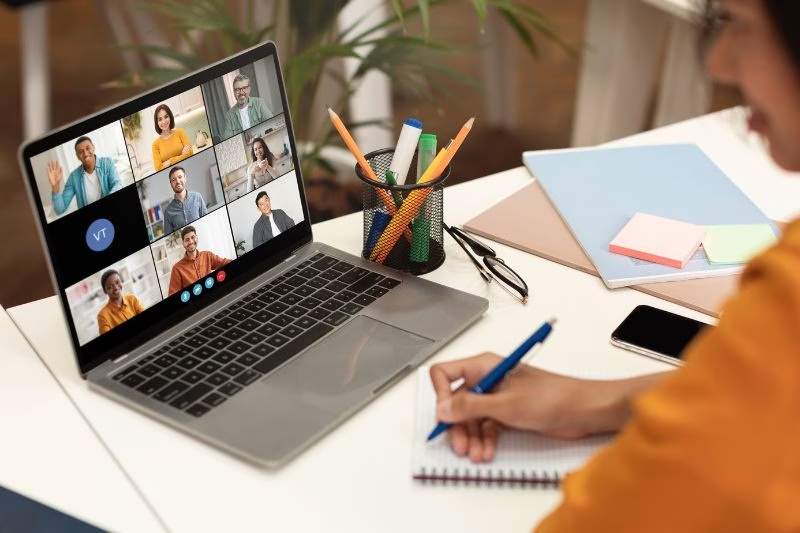
We learned this during the pandemic. People wrote reports from home. Teams had meetings online. Campaigns were planned. Clients were managed. Admin work got done. Deadlines were met.
Was it perfect? Probably not, but neither is spending three hours a day on the road.
For Women, The Commute Often Costs More
From a woman’s point of view, the work-from-home conversation is never just about comfort.
It revolves around the time to get the children ready without shouting through the morning. Time to drop them off without speeding through traffic. Time to check on ageing parents. Time to pump, breastfeed, cook, rest, exercise or simply breathe before the next thing needs to be done.
Many women are not just travelling from home to office and office to home.
They are travelling between roles.
Worker. Mother. Daughter. Wife. Caregiver. Planner. Problem-solver. The person who remembers what needs to be bought, signed, packed, paid, cooked, booked and followed up.
So when a woman loses two or three hours a day to traffic, she is losing the small pockets of space that hold the rest of her life together.
This is why work-from-home should not be treated like a luxury.
Working From Home Should Not Be Held Against Anyone
The frustrating part is that even when companies allow work-from-home days, many employees still feel guilty using them.
Are you really working?
Are you less committed?
Are you taking it easy?
Will you be overlooked because you are not seen?
This is where the conversation needs to mature.
A person sitting at an office desk is not automatically productive. A person working from home is not automatically lazy. Work should be measured by what gets done.
Did the report go out? Was the client answered? Was the project completed? Did the team communicate properly? Were deadlines respected?
If the answer is yes, then why does it matter whether the work was done in an office chair or at the dining table. Presence is not the same as performance, and in 2026, companies should know the difference.
This is not about saying everyone should work from home forever.
That is not realistic, and for many industries, it is not possible.
But we need to stop treating flexibility as if it is a threat to business. A good hybrid system can still have structure. Teams can still meet. Managers can still track progress. People can still collaborate.
The difference is that employees do not have to waste hours on the road every single day when the work does not require it.
Maybe it is two days at home. Maybe it is flexible start times. Maybe it is remote work on days without physical meetings. Maybe parents and caregivers get more room to manage their schedules.
There are many ways to do this properly.
We Cannot Keep Calling Burnout Commitment

Somewhere along the way, we started treating exhaustion as a sign of discipline (at this point you may be nodding reluctantly).
Wake up before sunrise. Sit in traffic. Work all day. Sit in traffic again. Reach home tired. Continue with family responsibilities. Sleep late. Repeat.
And if someone asks for flexibility, they are made to feel as if they are asking for too much, but wanting a more humane work arrangement is not being difficult.
Malaysia does not need to choose between productivity and flexibility.
We can have both and in fact, for many workers, especially women who carry responsibilities at work and at home, flexibility may be what makes productivity possible.
Work-from-home should not be something people whisper about or apologise for. It should not come with side-eye, slower career growth or the feeling that you now have to prove yourself twice as hard.
For jobs that can support it, work-from-home should be a real option. But without punishment.
Because it is 2026, and too many Malaysians are still losing hours of their lives just to reach a desk and decent wifi.
Disclaimer: The views expressed in this op-ed are those of the writer and do not necessarily reflect the views of Nuren, its team, partners or affiliates. Unless stated otherwise, this piece may be published anonymously. It is intended for general discussion only and should not be taken as professional advice.