



For many women, the idea of bodily autonomy sounds simple.
It means having the right to make decisions about your own body, your health, your relationships, your clothing and your safety.
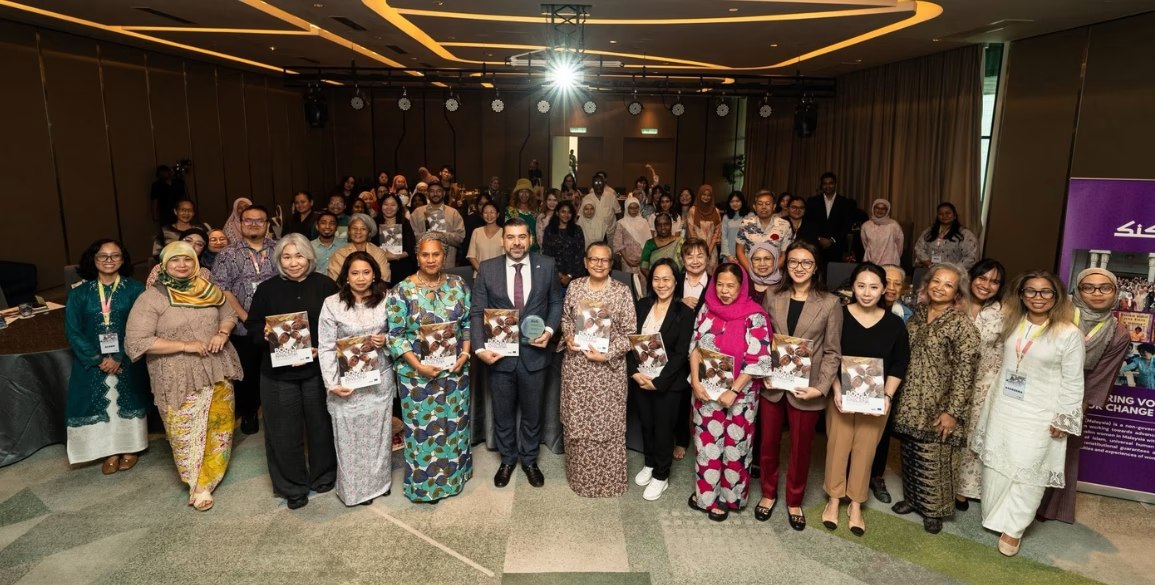
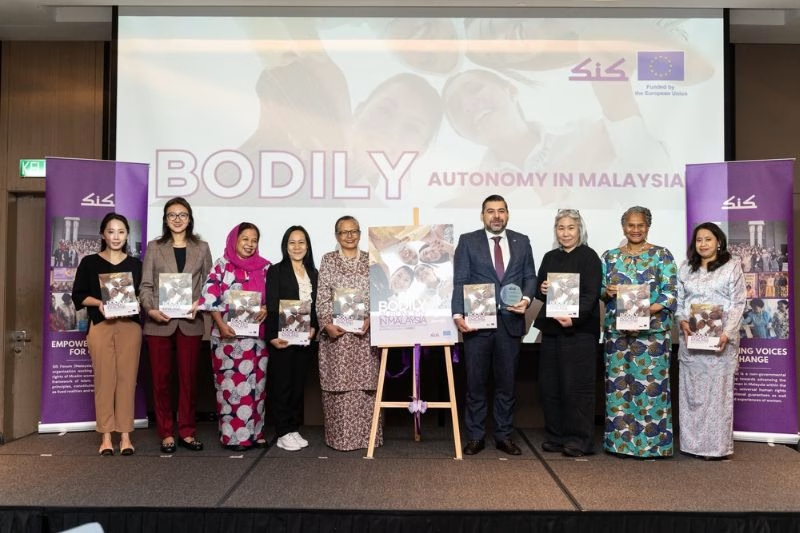
But a new report by SIS Forum Malaysia, titled Bodily Autonomy in Malaysia: Perceptions and Experiences Across Women’s Life Stages, shows that for many women in Malaysia, this right is still not always straightforward.
What The Malaysian Study Looked At
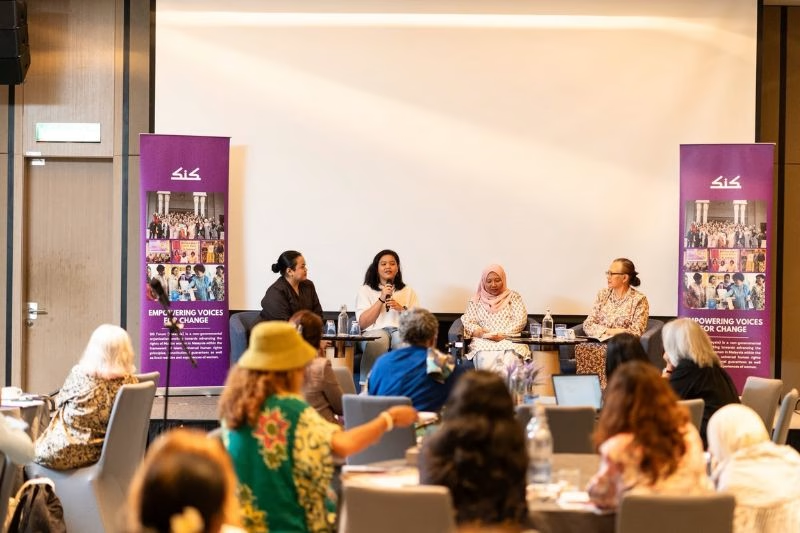
The nationwide study looked at the experiences of 1,004 women aged 18 to 65 and above, across different backgrounds, locations and life stages.
It also included responses from 92 men for added social context.
The report looked at several areas of women’s lives, including relationships, consent, safety, education, healthcare, clothing, online spaces and reproductive rights.
Many Women Still Struggle To Say No
One of the key findings was that only 52% of women who were married or in a sexual relationship said they could refuse sex with their spouse or partner.
For women who felt they could not say no, the most common reasons included marital duty, religious beliefs and fear of upsetting their spouse or partner.
This finding is important because consent does not stop after marriage.
It also shows how strongly social expectations can shape a woman’s ability to make decisions about her own body.
The report also found that Malaysia’s women’s bodily autonomy score stands at 45%.
This is lower than the global average of 55% and far below the East and Southeast Asia average of 76%.
In simple terms, this means many women in Malaysia still face barriers when making personal decisions about their own bodies and lives.
Safety Remains A Major Concern
Beyond relationships, the study also looked at how women experience safety.
Nearly half of the women surveyed had experienced at least one form of sexual harassment or violence.
Online spaces were also a major concern, with many women reporting unwanted sexual messages, cyberstalking or other forms of online sexual violence.
For many women, the issue is not only about what happens in public spaces. It also includes what happens online, at home and within private relationships.
Many Incidents Are Still Not Reported
What makes the issue even more worrying is that many incidents are never reported.
Some women said they did not think the incident was serious enough. Others feared they would not be believed or felt shame and stigma around speaking up.
This shows why safer, more supportive reporting systems are still needed.
Women need to feel that they can come forward without being blamed, dismissed or judged.
Women Want Better Sexuality Education
The study also highlighted gaps in education.
Many women said they did not receive proper comprehensive sexuality education in school. Instead, many had to learn about reproductive health, consent and bodily autonomy from the internet.
At the same time, there appears to be strong support for better education.
According to the study, 88% of women agreed that Malaysian schools should provide comprehensive sexuality education that includes bodily autonomy and rights.
Healthcare Access Is Not Equal For All Women
Healthcare access was another important issue, especially for women in rural areas, Indigenous women, women with disabilities and other marginalised communities.
The report found that some women still face barriers when trying to access clear information, respectful care and services that allow them to make informed decisions.
This matters because bodily autonomy is not only about personal choice.
It is also about whether women have the information, access and support needed to make those choices safely.
Many Women Still Do Not Know Their Reproductive Rights
The study also touched on public understanding of reproductive rights.
For example, while abortion is legal in Malaysia under certain circumstances when the pregnancy poses a risk to the woman’s physical or mental health, many women remain unaware of this.
This lack of awareness can make it harder for women to seek the right support when they need it.
Now, the report is not only about statistics.
It is about the everyday decisions women make, and whether they are truly allowed to make those decisions freely, safely and without fear.
From saying no, to seeking healthcare, reporting harassment, choosing what to wear or understanding their own rights, the study shows that bodily autonomy is still shaped by family expectations, social pressure, education gaps and institutional barriers.
As it stands, the report also calls for stronger support systems.
This includes better sexuality education, safer reporting channels, stronger protection against gender-based violence, more accessible healthcare and survivor-centred support for women who come forward.
For Malaysia, this study opens up an important conversation.
Women’s bodily autonomy is not just a women’s issue. It is a public health issue, an education issue, a safety issue and a rights issue.
And if the numbers show us anything, it is that many women are still asking for something very basic: the right to be heard, believed and trusted when it comes to their own bodies.
Disclaimer: The information in this article is intended for general reading and awareness only. It does not replace advice from qualified medical, legal, financial, religious or other relevant professionals. If you are facing a specific concern, please speak to the appropriate expert or authority for guidance.