


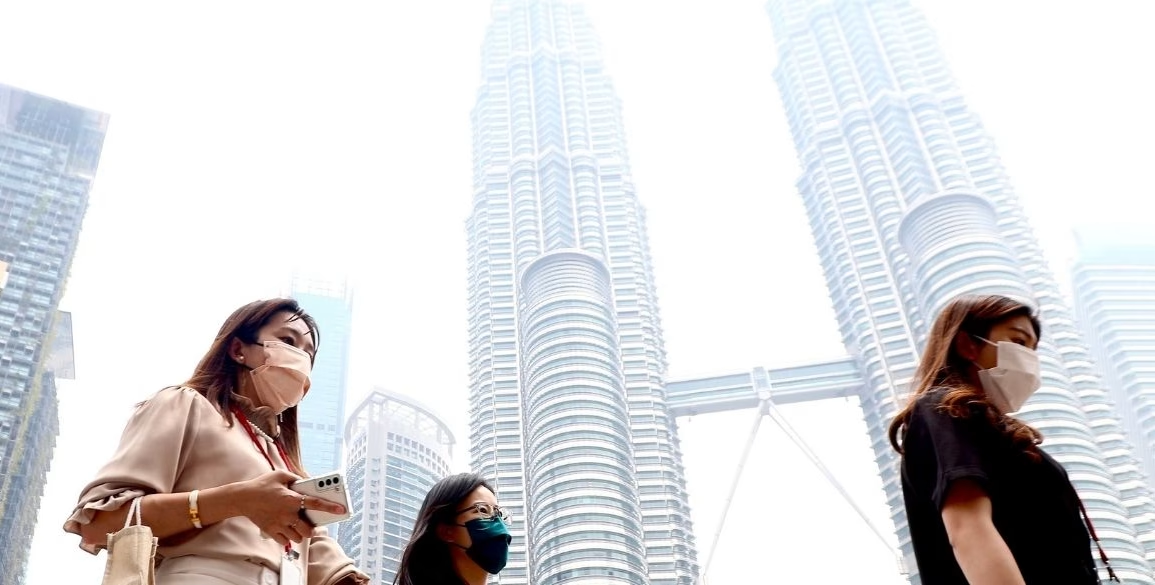

If the skies have been looking unusually grey lately, it isn’t just your imagination.
Malaysia continues to experience hazy conditions, but the severity varies significantly depending on where you are — with Sarawak currently bearing the brunt of it.
As of the morning of Wednesday, 2 September, several locations in Sarawak were recording hazardous Air Pollutant Index (API) readings above 300.
Sarawak Is Currently the Worst Hit
At 10am, some of the highest readings recorded in Sarawak included:
- Lubok Antu: 331 (Hazardous)
- Lundu: 325 (Hazardous)
- Kanowi: 323 (Hazardous)
- Kuching: 318 (Hazardous)
- IPD Seria: 309 (Hazardous)
Meanwhile, Sibu recorded 284, Sarikei 275, Tebedu 270, Mukah 232 and Bintulu 223, placing them in the very unhealthy category.
Other locations including Miri, Kapit, Limbang and Samalaju remained at unhealthy levels.
The situation has been particularly severe over the past few days. On Tuesday morning (1 September 2026), Kuching and Serian recorded API readings above 400.
What About Sabah and Peninsular Malaysia?
The haze isn’t confined to Sarawak.
Sabah has also experienced deteriorating air quality in recent days.
On 31 August, Tawau recorded an unhealthy API of 153, while the Kota Kinabalu Polytechnic monitoring station recorded 111.
Parts of Peninsular Malaysia and Labuan have also recorded unhealthy air quality during the current haze episode, although conditions can change considerably throughout the day.
Malaysia’s API is classified as:
0–50: Good
51–100: Moderate
101–200: Unhealthy
201–300: Very unhealthy
Above 300: Hazardous
This means a reading of 300 isn’t simply a slightly worse version of a hazy day but it has entered the highest air pollution category.
Why Is Malaysia Experiencing Haze?
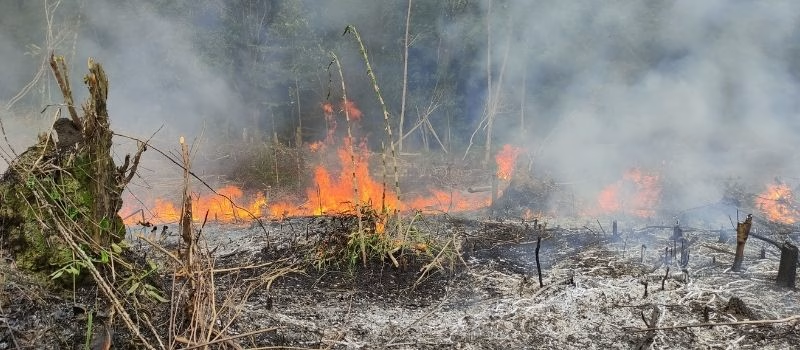
The current situation has been linked partly to transboundary smoke as fires and hotspots continue to be detected across parts of Indonesia.
Hundreds of hotspots have recently been detected in Kalimantan, while hotspots have also been recorded in Sumatra and Malaysia.
Weather and wind direction can determine where that smoke travels, which is one reason air quality can look very different from one state or even one town to another.
For Malaysians, the most useful thing to do right now is check the API for your specific area rather than relying on what the sky looks like.
Air quality readings are updated throughout the day on the Department of Environment’s official APIMS platform.
Disclaimer: This article is for public interest purposes only. Information is based on publicly available reports at the time of publication.