

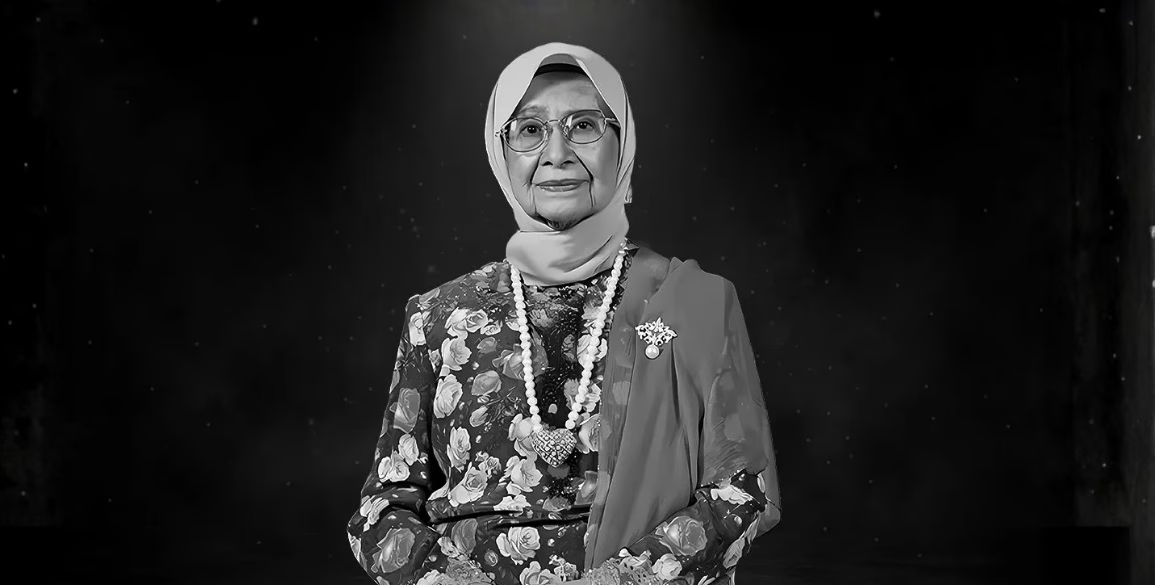

For much of her life, Tun Dr Hasmah Mohamad Ali stood beside one of the most recognisable men in Malaysian history.
But long before she became known as the wife of Tun Dr Mahathir Mohamad, she was Hasmah…a young woman from Klang who entered medicine at a time when seeing a Malay woman in the profession was still a rarity.
And over the course of 100 years, she built a legacy entirely her own.
Tun Dr Siti Hasmah passed away on 28 September 2026 at the National Heart Institute (IJN), just months after celebrating her 100th birthday. She leaves behind her husband, seven children, and a lifetime of work spanning medicine, public health, women’s welfare and community service.
But perhaps one of the most interesting things about her story is that medicine wasn’t actually the original plan.
She Wanted to Be a Journalist
Born Hasmah Mohd Ali on 12 July 1926 in Kampung Jawa, Klang, she was the sixth of 10 children.
She attended several schools including Methodist Girls’ School, St Mary’s School and Pudu English Girls’ School before eventually enrolling at the King Edward VII College of Medicine in Singapore in 1947.
Young Hasmah had initially wanted to become a journalist. Instead, circumstances led her towards medicine, and ultimately towards a career that would shape much of her life.
She was the only Malay woman studying medicine at the college in her intake that year.
In 1955, she graduated as a doctor and began her housemanship at Kuala Lumpur Hospital.
For a young Malay woman in the 1950s, that alone was remarkable.
A Doctor Before She Was a Public Figure
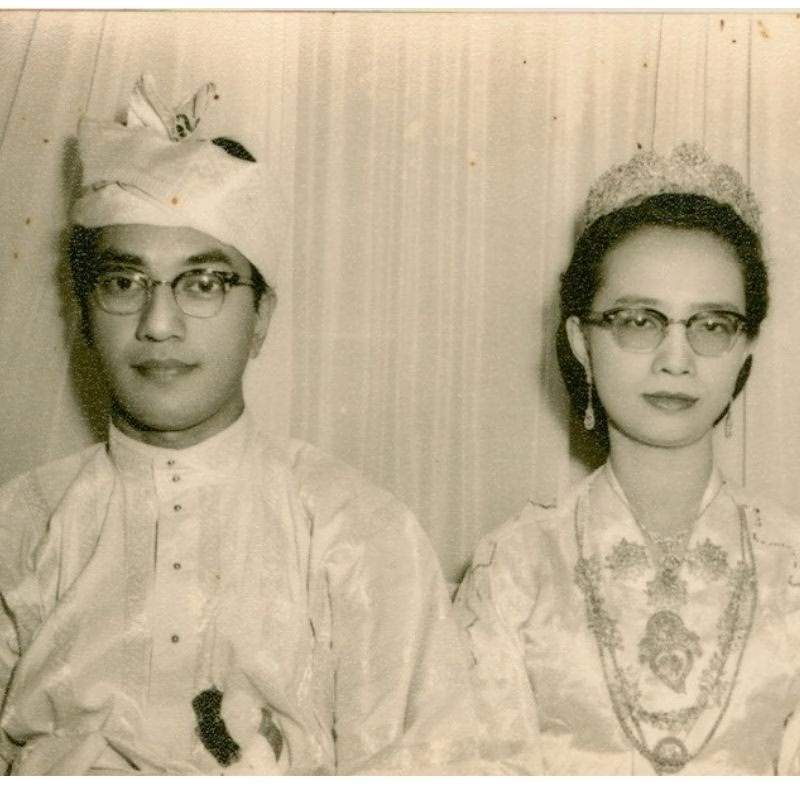
After marrying fellow doctor Mahathir Mohamad in 1956, Hasmah moved to Alor Setar, where she continued working in government health services.
Her work brought her face-to-face with the realities experienced by families in rural Kedah, particularly mothers and children with limited access to healthcare.
It would become one of the defining areas of her career.
In 1965, she became the first woman appointed as a medical officer in the Maternal and Child Health Department. Then, in 1974, she became the first woman appointed as Kedah’s State Maternal and Child Health Officer.
Her work extended beyond treating patients and she participated in rural health programmes and wrote about family medicine as well as the socioeconomic factors surrounding pregnancy and childbirth in Malaysia.
Years later, when asked about her proudest moments in public service, it wasn’t a title or award that stood out but it was being accepted by the rural communities she had served in Kedah.
When Tun Dr Mahathir became Malaysia’s fourth prime minister in 1981, Tun Dr Siti Hasmah entered a completely different kind of public life.
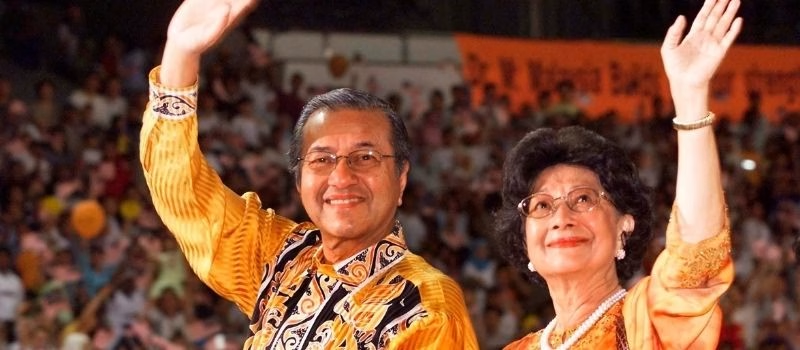
For the next 22 years, and once again when her husband returned as prime minister in 2018 where Malaysians would become familiar with the woman often standing quietly beside him.
But she didn’t abandon the causes she had spent years working on.
She continued advocating for women’s health, family planning, adult literacy and efforts against drug abuse. Her work also included rural women’s development and maternal and child health, taking some of those causes onto the international stage.
She held roles in organisations ranging from the Malaysian Girl Guides Association and Kedah Family Planning Association to the Malaysian Medical Association Foundation, while remaining involved in causes surrounding children, families and public health.
In other words, being the prime minister’s wife became another chapter in her life.
Hasmah and Mahathir
Of course, it is difficult to tell her story without also telling part of theirs.
They met as medical students at King Edward VII College of Medicine in Singapore.
According to an account from Siti Hasmah: Citra Wanita Dua Zaman, their romance can be traced back to 23 April 1949, when a young Mahathir told Hasmah he loved her while they were walking back to their hostel after watching a film.
They married on 4 August 1956 and went on to have seven children.
In August 2026, just weeks before her passing, the couple marked 70 years of marriage. By then, Tun Dr Mahathir was 101 and Tun Dr Siti Hasmah was 100.
There Was Also Music
Beyond medicine and public life, there was another side of Tun Dr Siti Hasmah that Malaysians came to know and love.
She played the violin.
She had learnt the instrument in her youth before eventually picking it up again in her 80s, performing publicly on several occasions. She also played the piano.
It’s a small detail compared with a century of accomplishments, perhaps. But it also makes the picture of Hasmah feel more complete.
Doctor. Mother. Wife. Advocate. Musician.
And, by many accounts, someone with a sense of humour about the extraordinary life she happened to find herself living.
“My Name Is Hasmah”
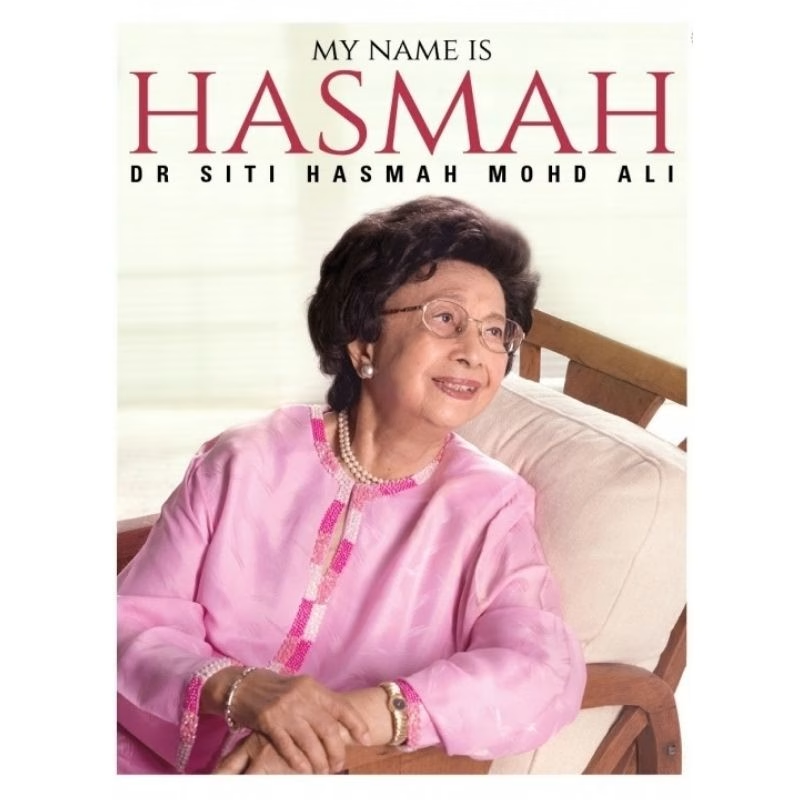
When she published her memoir in 2016 at the age of 90, she gave it a remarkably simple title: My Name is Hasmah.
The book told stories from her upbringing and medical career to her travels and life alongside Tun Dr Mahathir.
Years later, she would reveal something Malaysians might not have realised: she wasn’t actually born “Siti Hasmah”.
Her name was simply Hasmah. According to her own account, “Siti” was added much later.
Because after a lifetime of titles: doctor, Tun, prime minister’s wife, public figure—there was always the woman underneath them. Hasmah.
A girl who once thought she might become a journalist.
A woman who entered a profession where few women like her could be found.
A doctor who travelled into rural communities to care for mothers and children.
A mother who raised seven children.
A public figure who spent decades using the platform available to her to speak about health, women, families and education.
And a woman who, at 100 years old, had lived through colonial Malaya, the Second World War, independence and generations of Malaysian history.
Tun Dr Hasmah will inevitably be remembered as the woman who stood beside Tun Dr Mahathir Mohamad.
But her century-long life reminds us that she was never simply standing beside history. She had made some of her own.
Disclaimer: This article is for public interest purposes only. Information is based on publicly available reports at the time of publication.