


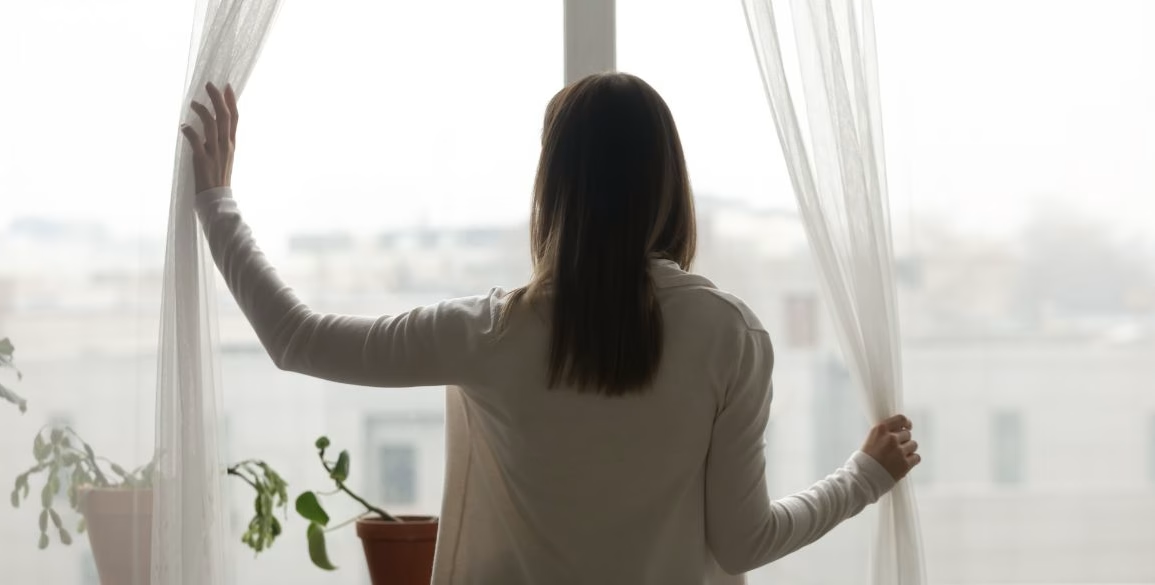

The sky is clearing. The API numbers are coming down. You can see the buildings across the road again.
But maybe you don’t feel as light as the sky looks.
You’re tired, a little flat, sleeping badly, and your body feels stiff. If that sounds familiar, you’re not imagining it. Weeks of staying in, even for good reasons, leave a mark.
What The Haze Did To Your Mind
When you spend days inside, the days start to blur.
Same rooms, same screens, same routine. Less sun, less movement and less chatting with real people can lower your mood and raise your stress.

Prolonged haze has been linked to anxiety and low mood, especially when people are stuck indoors for long stretches.
For many of us women, it’s heavier. We’re often the ones keeping the household running: kids home from school, meals, work, everyone’s moods.
When we stay in, there’s no change of scenery and no quiet moment to ourselves.
We may feel irritable, teary, restless or just numb. That’s a normal response to a strange few weeks.
What The Haze Did To Your Body

Your sleep. Morning light helps set your body clock. Without it, your sleep cycle can drift, so you feel tired in the day and wired at night.
Your energy. Less movement means less energy. Many of us feel more tired after resting all day than after a busy one.
Your vitamin D. Less sun exposure means lower vitamin D, which supports your bones and immunity.
Your body. Stiff neck, tight shoulders and sore back are common after weeks of sitting, scrolling and lying around.
Your breathing. Staying in reduces haze exposure but doesn’t erase it. Some of us are still coughing or feeling scratchy in the throat or eyes. If it lingers, get it checked. The Health Ministry lists pregnant women, children, the elderly and people with breathing or heart problems as most at risk.
Easing back, gently
You don’t need a big reset. Start small:
- Get morning light. Ten to fifteen minutes outside, once the API is in a safe range, is a good start.
- Move a little every day. A short walk, stretching or a light workout. Build up slowly.
- Open the house. Air out your home when readings are good, and clean or replace your aircon and purifier filters.
- Fix your sleep. Wake up at the same time daily, dim screens at night, and keep your room dark and cool.
- See real people. Meet a friend for coffee. A proper chat does more for your mood than a hundred messages.
- Be kind to yourself. Slow days, low energy and snappy moods are part of recovering. Rest without guilt.
- Ask for help if it lingers. If you feel persistently low, anxious or unable to cope, or you have ongoing breathing problems, talk to a doctor.
The haze will pass. You don’t need to rush back to normal, but you do deserve to feel like yourself again.
Disclaimer: The information in this article is intended for general reading and awareness only. It does not replace advice from qualified medical, legal, financial, religious or other relevant professionals. If you are facing a specific concern, please speak to the appropriate expert or authority for guidance.