




For many years, feminine hygiene has been shaped by a simple idea : cleanliness comes from eliminating bacteria. Products promising to “kill 99.99% of germs” or provide “deep cleansing” have long dominated the market. However, growing scientific understanding is beginning to challenge this assumption.
The vagina is a naturally self-regulating environment that maintains its own microbial balance and typically does not require internal cleansing.
However, many intimate hygiene habits today are still shaped by the belief that stronger cleansing provides better protection, despite growing medical understanding that excessive cleansing may sometimes do more harm than good.
Rather than being sterile, the vaginal area contains naturally occurring microorganisms that play an important role in maintaining intimate health.
The Role of “Good Bacteria”
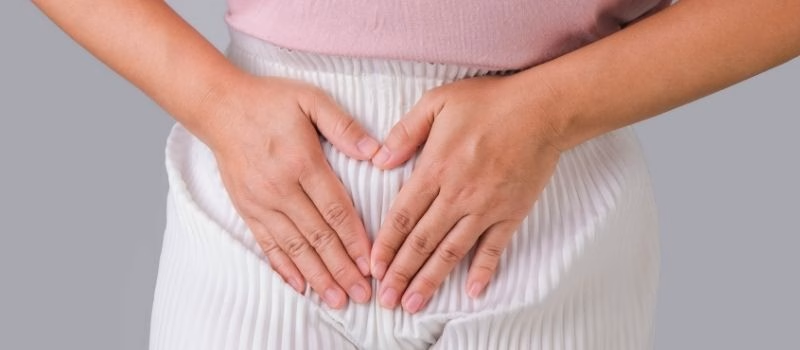
Among the most important of these microorganisms are Lactobacillus, commonly referred to as the body’s “good bacteria.” These bacteria help maintain a slightly acidic vaginal pH, typically between 3.8 and 4.5.
This acidity creates conditions that make it more difficult for harmful bacteria and yeast to grow.
This growing understanding is also changing how scientists think about hygiene. The future may not be about killing more bacteria, but about protecting the beneficial bacteria that help protect us.
This delicate environment can naturally shift due to factors such as hormonal fluctuations, menstruation, stress, medications, lifestyle factors, and certain intimate hygiene practices.
When this balance is disrupted, some women may experience irritation, unusual discharge, odour, dryness, or infections.
When Cleansing Becomes Over-Cleansing
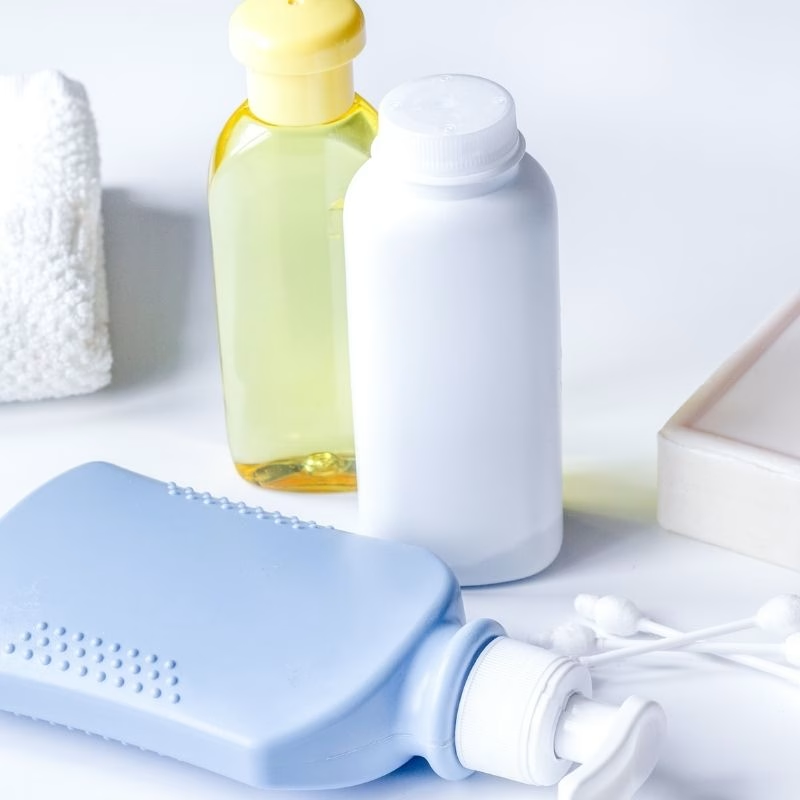
Many intimate hygiene habits are adopted with good intentions.
However, stronger cleansing does not always mean better protection.
In some cases, intimate care routines may become overly aggressive, particularly when they involve frequent washing, heavily fragranced products, strong antibacterial formulations, alcohol-based ingredients, or internal cleansing practices such as douching.
While these approaches are often intended to promote cleanliness, medical guidance increasingly suggests that they may disrupt the natural vaginal environment and affect the balance of beneficial bacteria that help support intimate health.
When the vaginal microbiome becomes imbalanced, some women may experience symptoms such as irritation, dryness, unusual discharge, odour, or discomfort.
Research has also associated microbial imbalance with conditions such as bacterial vaginosis, urinary tract infections (UTIs), and yeast infections, although these conditions are influenced by multiple contributing factors and should not be attributed to a single cause alone.
Reference:
- https://www.acog.org/womens-health/experts-and-stories/ask-acog/is-it-safe-to-douche-during-pregnancy
- https://www.devonsexualhealth.nhs.uk/your-sexual-health/genital-hygiene/
- https://www.cdc.gov/bacterial-vaginosis/about/index.html, https://www.cdc.gov/std/treatment-guidelines/bv.htm
- https://pubmed.ncbi.nlm.nih.gov/29526143/
- https://www.mdpi.com/1648-9144/61/7/1302, https://link.springer.com/article/10.1007/s10096-024-04915-7

This byline is contributed by: Dato’ Dr. Bryant Yap Ceong Cur, Primary Healthcare Physician and Founder & Managing Director of Klinik Yap & Partners Malaysia
Disclaimer: The information in this article is intended for general reading and awareness only. It does not replace advice from qualified medical, legal, financial, religious or other relevant professionals. If you are facing a specific concern, please speak to the appropriate expert or authority for guidance.